
Valve's "Teraleak": 12TB of internal material leaked, and no hacking required
The community has spent since yesterday picking through one of the largest archives the industry has seen. A dump of roughly 12 terabytes of Valve's internal data began circulating on August 29, and researchers are still cataloguing exactly what's inside.
But the most uncomfortable detail for Valve isn't the content — it's how it got out: there was no hack. It has been confirmed the material was obtained through a publicly accessible endpoint requiring no authentication. In other words, the data sat on a server reachable without credentials or a compromised account.
Where it all comes from
The archive originates from Steam2, the content-server infrastructure Valve used until SteamPipe replaced it in March 2013. That explains why material from so many different eras and projects appears jumbled together: it is, essentially, a forgotten warehouse that was never properly locked.
The content spans roughly 2003 to 2013, and what's confirmed so far includes:
- Portal 2 development builds, among them a July 2009 version with unseen sequences and beta menus.
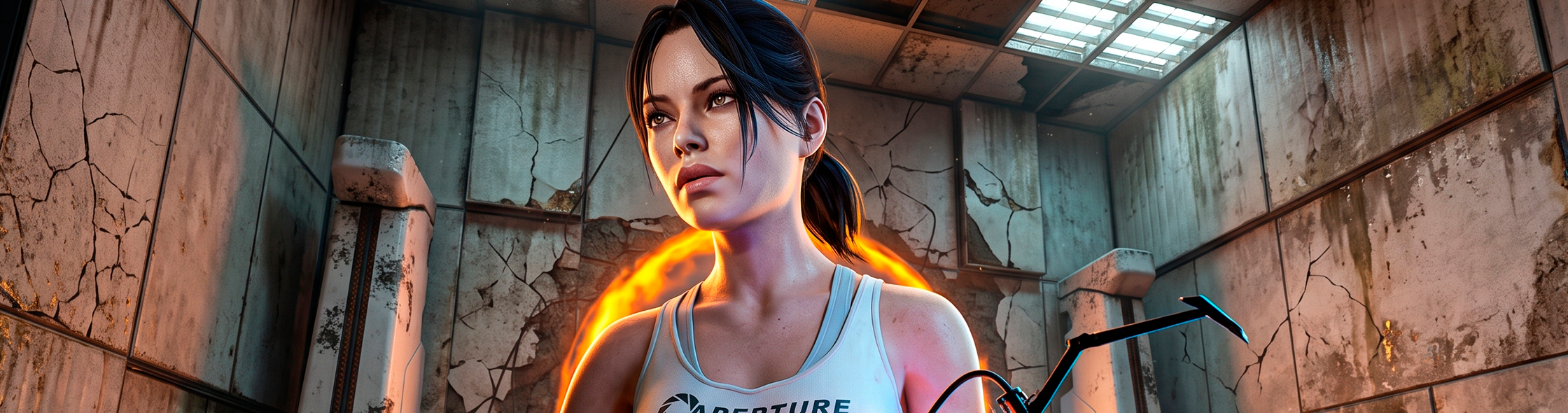
- Assets from the cancelled F-Stop, the project known internally as Aperture Camera: a Portal prequel set in Aperture Science during its heyday, with no portal gun, no GLaDOS, and no Chell, whose core mechanic revolved around a camera.
- Early Left 4 Dead material, with researchers reporting some builds are playable.
- Counter-Strike: Global Offensive content, identified by dataminer Gabe Follower.
There are also traces suggesting a possible connection to Half-Life 2: Episode 3, including a model dubbed "Weaponizer." Worth flagging for what it is: an open line of investigation, not a confirmed finding.
What this means for Counter-Strike (and what it doesn't)
This is where things need putting in perspective, because two very different leaks are getting conflated on the forums.
This leak is history, not a threat. The CS:GO material it contains is from the Steam2 era — pre-2013. We're talking about assets and early builds of a game released in August 2012, running on Source 1. Counter-Strike 2 runs on Source 2, so the practical value of this material to anyone wanting to develop cheats for the current game is very limited. Its interest is archaeological: seeing how Valve worked, what ideas were discarded, how maps evolved.
The leak that genuinely raised concern was a different one, three weeks ago. In mid-August, CS:GO's March 2019 source code leaked, described as the most recent version ever shared in a leak of this kind, including Danger Zone. That one did generate reasonable fears about new routes to bypass VAC — though it's still Source 1 code.
So if you've seen alarmist headlines connecting the Teraleak to CS2's anti-cheat, here's the nuance: they're separate things, and this is the less dangerous of the two.
The real problem: security
Where this case is genuinely serious is on the security side, for one very specific reason.
In an intrusion-based leak, there's an attacker breaching a system. Here, according to reports, the endpoint was publicly reachable and allowed access to historical content with no authentication barrier whatsoever. If that server was under Valve's control, this isn't a security breach in the conventional sense but an access-control failure: legacy infrastructure left exposed that nobody decommissioned when it stopped being used.
It's an uncomfortable reminder of a problem affecting half the industry: systems that get replaced don't always get switched off, and what's left running eventually gets found.
Keeping feet on the ground
Two caveats before wrapping up.
First: Valve has issued no statement. None of the above is confirmed by the company, and everything comes from community researchers and specialist outlets.
Second: descriptions of the archive as "the complete Valve repository" are circulating. That's a community claim, not an established fact. A dump originating from Steam2 doesn't mean it contains every historical Valve file or every project the company worked on. The real inventory of what's inside is still being compiled, and will likely take weeks.
What is clear is the find's appeal: an unusual window into how some of the most influential games of the past twenty years were made — including the foundations of the Counter-Strike we know today.
Source: The CyberSec Guru, GameRant, ixbt.games, Gabe Follower.